Feminicide in Cameroon Part I
Behind a simple terminological fluctuation lies a major political issue. In Cameroon, "femicide" and "feminicide" are used interchangeably in the media and public debate. Yet these two concepts do not mean the same thing: the former refers to misogynist murder, while the latter includes State responsibility and victims beyond biology.
This confusion is not trivial. It exposes the fight to risks of exclusion, the de-legitimisation of activist alliances, and ultimately the emasculation of the concept's transformative power.
In this first policy note of an original series, the authors trace the genealogy of the two terms, analyse their adoption in Cameroon, and call for a clarification that is essential for any coherent public action. Read, share, and discuss among actors fighting against GBV
African Centre for Crime and Security Studies (ACCSS Africa)
Femicide for Some, Feminicide for Others: Conceptual Ambiguity and the Risk of Emasculating a Transformative Concept
Introduction
Two headlines, among many others, suffice to illustrate the prevailing terminological confusion:
- Femicide in Cameroon : At least 33 women killed since January 2026 (Lebledeparle.com 14 avril 2026)
- Feminicides in Cameroon: 67 cases recorded since 1 January 2024 (actucameroun.com, 26 November 2024)
Dozens of women have been killed by their partners in Cameroon in recent years, and the apparent explosion of these cases has been accompanied by the growing visibility of a new term: femicide. Or rather feminicide. In Cameroon's public debate, femicide and feminicide are used interchangeably, as the headlines above show, to refer to the same reality: the perceived alarming increase in murders of women by intimate partners or family members. Is this a simple spelling mistake, a trivial linguistic fluctuation, or a profound misunderstanding on the part of activists working for women's rights in Cameroon of the scope of these concepts? What does this conceptual ambiguity tell us about the state of the fight against gender-based violence (GBV) in the country, and what risks and consequences arise from it?
To answer these questions, this first policy note begins by examining the genealogy of the two terms, before tracing their trajectory of adoption in Cameroon. It shows, in particular, that the term feminicide was coined in Latin America to address perceived shortcomings in the term femicide, which failed to fully account for victimisations related to non-cisgender identities and the structural responsibility of the State. The two expressions are embedded in and/or support political and ideological struggles that some consider to be distinct. By conflating these two terms, the Cameroonian public debate exposes itself to serious risks of exclusion, political de-legitimisation, and, ultimately, the emasculation of the concept's transformative potential.
Genealogy of Two Key Terms in the Fight against Violence against Women
On 26 November 2012, the "Vienna Declaration on Femicide" was signed at a one-day symposium organised by the Academic Council on the United Nations System (ACUNS). This symbolic event occurred more than forty years after Diana Russell, a pioneering feminist researcher and activist, introduced the term at the International Tribunal on Crimes against Women. In 1976, Russell used the word to draw attention to the violence and discrimination perpetrated by men against women, although she did not provide an explicit definition until 1990: "the murder of women by men motivated by hatred, contempt, pleasure, or a sense of possession of women" (Caputi & Russell, 1990: 34).
A few years later, Radford and Russell (1992) defined femicide as a misogynist murder committed by men. The two authors pursued a threefold objective: to highlight the widespread violence suffered by women and girls at the hands of men; to mobilise relevant actors to tackle the problem; and to encourage governments to legislate and impose appropriate penalties. In 2001, Russell broadened the definition to include the murder of females by males because of their sex, encompassing all forms of male sexism, whether a sense of entitlement, pleasure, or the demand for submission. The author justified the use of the terms female and male by the need to recognise that infants, girls, and adolescents are also killed for sexist or gendered reasons.
Since then, significant work on femicide has been carried out continuously. Attention to this phenomenon has, however, increased considerably from the 2000s onwards, driven by feminists, local communities, academics, and certain public officials. Resistance has been most active in Latin America, a region that records some of the highest femicide rates in the world while also offering remarkable examples of social and legislative transformation.In this context, Marcela Lagarde introduced the term feminicide (feminicidio) in Mexico to better highlight the State's role in omission, negligence, or even complicity in the face of violent murders of women and girls, particularly those rendered structurally more vulnerable (indigenous women, poor women, sex workers). Lagarde follows in Russell's wake while making a shift: feminicide denounces not only patriarchal oppression but also the impunity guaranteed by State institutions that fail to deliver justice to victims and their families. In line with this approach, the use of the term feminicide rather than femicide also denotes "the death of a female being (in the biological sense of female) or of a person presenting feminine characteristics, whether or not they are a woman" (Monárrez Fragoso, 2019: 89).
In other words, whereas femicide primarily refers to the murder of persons born with female reproductive organs, feminicide explicitly includes lethal violence against persons who identify as girls or women, temporarily or permanently, regardless of their biological sex. The political and legal implications of this distinction are radical, as will be shown in the third part of this note.
Although used mainly in Latin America, the term feminicide has since been adopted by several European countries, notably Spain and Italy (Spinelli, 2011). It is finding growing resonance worldwide as mobilisations draw attention to State responsibility and the inadequacy of State responses to the murders of women, girls, and feminised persons (see note no. 3 of this series).
It is precisely on this conceptual tension — biological versus identity-based, individual-focused versus extended to State responsibility — that the Cameroonian public debate currently stumbles, most often without even knowing it.Chronology, Actors, and Modalities of Domesticating a Concept of Distant Origins
A brief review of online media reveals five major observations.First, the introduction of the term into the Cameroonian media space is recent. The first article identified that uses either expression dates from July 2020. It is an "opinion" published by Lebledeparle.com under the title:
"The Index of Violence against Women Is Proportional to Their Social Condition".
This text responded to the death of Larissa Azenta, who died from burns inflicted by her husband Ghislain Diabou on 29 June 2020. The author used 'feminicide' without bothering to define it.
Second, the term 'feminicide' is now used approximately five times more often than 'femicide' in the examined Cameroonian media corpus (39 occurrences against 8). It is indeed feminicide, without any explanation of its conceptual scope, that has dominated usage since this first occurrence — a situation that brings a smile to anyone familiar with both the genealogy of this term and the relationship that Cameroonian society and institutions have with new sexual and gender identities.
Third, while most media outlets that have published several articles on the subject tend to stick to the same term, at least three of them — camer.be, Lebledeparle, and stopblablacam — use femicide and feminicide interchangeably, suggesting that no stable or deep reflection underpins these choices.
Fourth, all articles published by foreign media use the term feminicide, with the notable exception of the Nigerian investigative outlet HumanAngle (based in Abuja), which, in the three articles identified, exclusively uses femicide. The use of feminicide by these information channels is consistent with the evolution of values in Western societies, where non-cisgender identities are increasingly recognised and protected. Conversely, the dominant use of feminicide by Cameroonian media actors — even though the term includes realities that the prevailing conservatism rejects — is at odds with the local ideological substrate and highlights copy-paste logics reflecting a superficial, even unconscious, appropriation of the concept.
Fifth, no substantive discussion has emerged in the Cameroonian public space regarding the meaning, scope, or political implications of these two expressions. The term functions as a floating synonym for "particularly shocking conjugal murder", stripped of the theoretical and activist thickness that presided over its creation.
Risks and Consequences of Conceptual Ambiguity
The conceptual ambiguity characterising the public debate in Cameroon entails at least three types of risk for the fight against gender-based violence: a risk of exclusion, a risk of political and ideological de-legitimisation, and a risk of emasculating the concept's transformative potential.
Regarding the risk of exclusion. As the genealogy has shown, femicide and feminicide are not synonyms, and one is not merely a fanciful pronunciation of the other. Each covers a specifically delimited scope of victims and was forged with a distinct political intentionality. Using them without critical distance, believing they mean the same thing, risks symbolically and practically excluding entire categories of victims. Femicide explicitly excludes from its framework all persons who were not born with female genitalia — trans women, non-binary persons assigned male at birth but feminised in their expression, etc. — even if their murders are motivated by misogyny. Conversely, local actors who claim to be fighting against feminicide, thus aligning themselves with the terminology of major Western media (France 24, TV5 Monde, BBC, DW, etc.), must be aware that the scope they adopt includes persons whose vulnerability stems from factors and life choices beyond biology. This awareness is an indispensable prerequisite for any relevant collective action against deadly violence involving persons more or less intimate.
Regarding the risk of political and ideological de-legitimisation, it should be noted that the absence of clarified debate prevents the formation of ideologically coherent action coalitions, both at the national level and in international partnerships. Women's rights organisations, UN agencies, and donors often use the term feminicide as if it carried a shared meaning, even when underlying conceptions diverge profoundly. This unexamined polysemy weakens the foundations of existing coalitions and offers easy footholds to reactionary discourses that can freely caricature an imported "gender ideology". Conversely, clarifying the terms would allow different actors to position themselves, making possible a genuine societal debate on the nature of femin(i)cides in Cameroon and on appropriate legislative, judicial, and social responses.
Finally, regarding the specific risk of emasculating the transformative potential of these two terms, conceptual vagueness results in draining the concept of its political charge. Reduced to a compassionate synonym for "domestic drama" or "crime of passion", femin(i)cide (a neutral formulation we will use in the rest of this series) then serves to express collective emotion after particularly sordid news items without ever triggering the structural critique that was its raison d'être. When Russell and then Lagarde coined these terms, their precise aim was to denaturalise the murders of women, to extract them from the news-in-brief section and inscribe them within the analysis of social power relations. This subversive potential is neutralised if the word becomes an empty shell that everyone fills according to the emotion of the moment. In Cameroon, this risk is all the more acute given that media and popular usage occurs without any legal basis or stabilised legal definition, depriving any potential public policies of a conceptual compass. In other words, the inability to name the problem precisely immediately compromises the possibility of measuring, preventing, and punishing it coherently.
Partial Conclusion
This first note has shown that the indistinction between femicide and feminicide is not an academic luxury: it engages profound political choices concerning the delimitation of legitimate victims, the solidity of activist alliances, and the very possibility of transformative public action. The second note in this series will directly address the question of the scale of femin(i)cides in Cameroon. It will seek to determine whether lethal violence against women has truly increased in recent years, or whether it has simply become more visible. Settling this question is an unavoidable prerequisite for moving beyond compassionate instrumentalisation and opening the way to a genuine policy of prevention and justice.
Références citées
• Caputi, J. et Russell, D. (1990). Femicide: Speaking the Unspeakable.
• Monárrez Fragoso, J. (2019). Feminicidio: Una tipología.
• Radford, J. et Russell, D. (1992). Femicide: The Politics of Woman Killing.
• Spinelli, B. (2011). Femicidio. Dalla denuncia sociale au riconoscimento giuridico.
À lire, partager et discuter entre acteurs de la lutte contre les VBG.
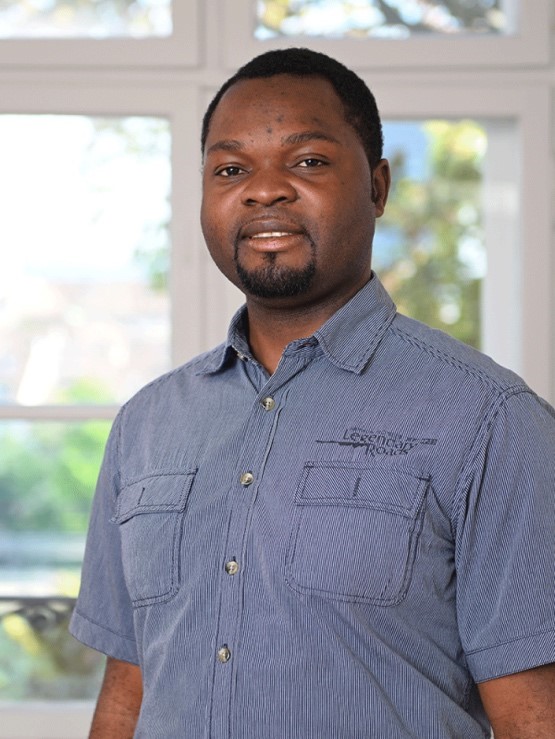
Dr. Dany Tiwa is a sociologist and critical criminologist. Dr. Tiwa holds degrees from the universities of Yaoundé I (Cameroon), Lille 3 (France), Hamburg (Germany), and Utrecht (Netherlands). He currently works as a senior research and evaluation consultant for several United Nations agencies and is the founder and executive director of the African Centre for Crime and Security Studies (ACCSS Africa).

Professor Solange Essomba is a professor of sociology in the Department of Sociology at the University of Yaoundé I, where she coordinates the master degree programme in Gender and Development. She is also a social science expert for the project on gender and combating climate extremes (PALM-TREEs), funded by IDRC and the University of Oxford.